
Fire-Smart Landscaping Ideas for California Homes

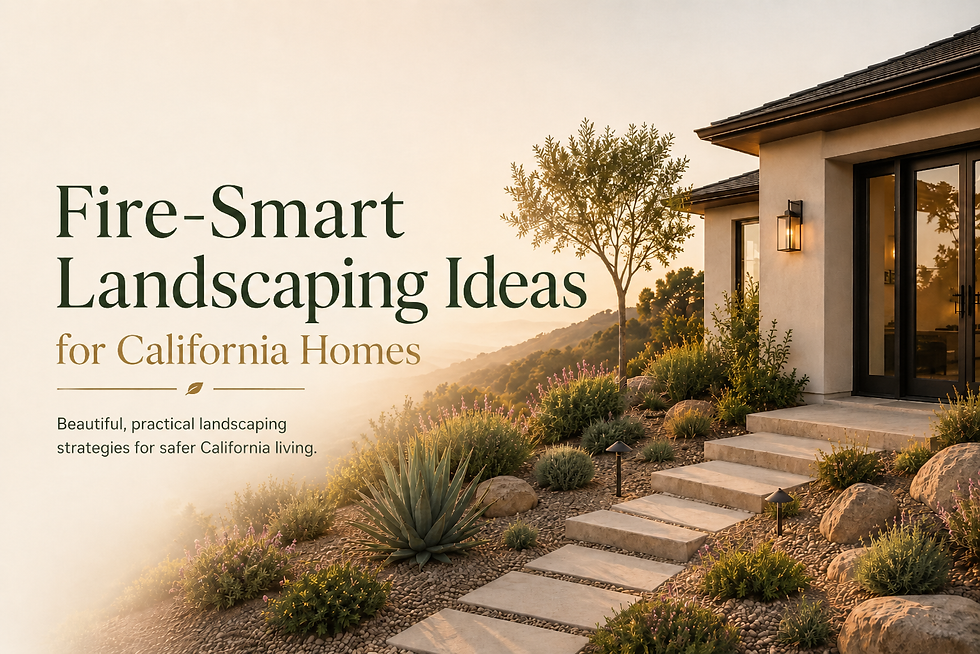
In 2026, more homeowners across Ventura County and Los Angeles County are rethinking their yards through a wildfire lens. Longer dry seasons, Santa Ana winds, recurring drought, mature vegetation, canyon lots, and homes near open space or chaparral all make California fire smart landscaping a practical priority in Thousand Oaks, Westlake Village, Calabasas, Agoura Hills, Simi Valley, Camarillo, Malibu, Hidden Hills, and surrounding communities.
The best fire smart landscaping ideas go beyond brush clearance landscaping. A true fire smart landscape connects defensible space landscaping, smart plant selection, noncombustible hardscape, irrigation, tree care, drainage, and regular maintenance into one plan.
California defensible space is commonly discussed in three areas: Zone 0, the 0–5 foot ember-resistant zone; Zone 1, the 5–30 foot lean, clean, and green zone; and Zone 2, the 30–100 foot fuel reduction zone. No yard is completely fire proof, and no plant is fireproof, but fire resistant landscaping California strategies can help reduce risk when the landscape is properly maintained. Landart Builders Inc helps homeowners create outdoor spaces that are fire smart, drought tolerant, functional, and beautiful.

Fire-smart landscaping is an integrated design approach that combines wildfire safe landscaping, water-wise design, outdoor living, and long-term landscape management. It looks at how plants, hardscape, structures, fences, irrigation, slopes, and maintenance interact during hot, dry, windy conditions.
In practice, fire smart landscaping California includes defensible space, fire resistant plants, non combustible materials, thoughtful plant spacing, tree care, drip irrigation, and ongoing fire prevention maintenance. Terms like fire resistant, fire safe, and firewise landscaping California mean “less likely to ignite or contribute fuel when healthy and maintained,” not guaranteed protection.
A well-designed fire safe yard design should still support patios, pools, pets, children, entertaining, privacy, and property value. Landart Builders Inc designs residential and commercial landscapes where safety, craftsmanship, and curb appeal work together.

Southern California properties often face dry summers, low humidity, drought-stressed landscape plants, and flying embers carried by Santa Ana winds. Hillside fire safe landscaping is especially important in Malibu, Agoura Hills, Calabasas, the Santa Monica Mountains, Thousand Oaks, and canyon-adjacent areas of Ventura County.
Mature trees, wood gates, aging fences, wood decks, dense shrubs, peeling bark, pine needles, and dense vegetation can create a fire hazard if they are not managed as part of a defensible space landscaping California plan. Homeowners also have to balance wildfire risk with erosion control, shade, privacy, outdoor entertaining, pets, kids, and water resources.
Typical risks include ember showers, radiant heat from nearby structures, wind-driven spot fires, and overgrown brush below slopes. The good news is that fire safe landscaping California can still look modern, lush, and premium with the right design.

Defensible space refers to the landscape zones surrounding a home that are designed to reduce wildfire intensity and help prevent embers from igniting structures. To create effective defensible space, homeowners should think of their yard in three distinct zones: Zone 0 (0-5 feet from the house), Zone 1 (5-30 feet), and Zone 2 (30-100+ feet).
Maintaining a defensible space around homes involves creating three distinct zones, each requiring specific maintenance practices to reduce fire risk, such as minimizing vegetation and using non-combustible materials in the immediate area around the house. These zones help slow fire spread and improve firefighter access, but they do not guarantee a structure will survive a wildfire. Always verify current rules with CAL FIRE defensible space guidance, your local fire department, city, county, and HOA.

Zone 0 is critical because many homes ignite when embers land near walls, vents, decks, stairways, balconies, doormats, dead leaves, patio cushions, mulch, or other combustible materials. In Zone 0, the area closest to the home, it is recommended to minimize vegetation and combustible materials, using non-combustible materials like gravel or stone instead.
In landscaping, non-combustible materials such as gravel, stone, and concrete are recommended for use within the first five feet of a home to minimize ignition risk from embers. Non-combustible materials are essential in creating defensible space around homes, particularly in the critical zone closest to the structure, where combustible materials should be minimized.
Design examples include gravel mulch along foundations, decomposed granite paths, concrete pads, stone pavers, masonry borders, and raised masonry planters set a few feet away from walls. Low-profile, high-moisture plants may be appropriate where local codes allow, but keep them spaced and maintained.

Zone 1 focuses on creating a “lean and clean” environment to reduce heat and flame movement. This area often includes patios, outdoor kitchens, fire pits, lawn areas, flower beds, retaining walls, and outdoor living spaces.
Use well-spaced fire resistant plants California homeowners can maintain, such as toyon, selected manzanita cultivars, California lilac, succulents, and low ground cover. Maintaining a distance of at least two times the height of shrubs between separate bushes helps in fire safety, although local requirements may vary by slope and fire zone.
Avoid continuous mulch beds under windows or near decks. In Ventura County, certain highly combustible vegetation, such as eucalyptus and rosemary, are banned within 30 feet of structures according to fire department guidelines, so always check current local plant restrictions before choosing plants.

Zone 2 aims to decrease the amount of vegetation that could fuel a wildfire as it approaches the home. This zone may include larger trees, slopes, utility areas, propane tanks, naturalized plantings, and transitions into neighboring open space.
Thin brush, break up continuous plant masses, mow grasses according to current local guidance, and reduce fire ladders by removing low branches and dry vegetation under trees. Pruning tree branches to maintain vertical clearance of at least 6 feet off the ground can help prevent ground fires from climbing into canopies.
California native plants can work well here when spaced and pruned correctly, including coast live oak, Lemonade Berry, Sugar Bush, Coyote Brush, California fuchsia, and buckwheats. On slopes, combine fuel reduction with erosion control, native trees, deep-rooted plants, and professionally designed drainage.


These fire smart landscaping ideas are practical starting points for homeowners, but every property should be adapted to slope, soil, wind exposure, microclimate, wildfire risk, and local code.
Use Gravel, Stone, and Hardscape Near the Home
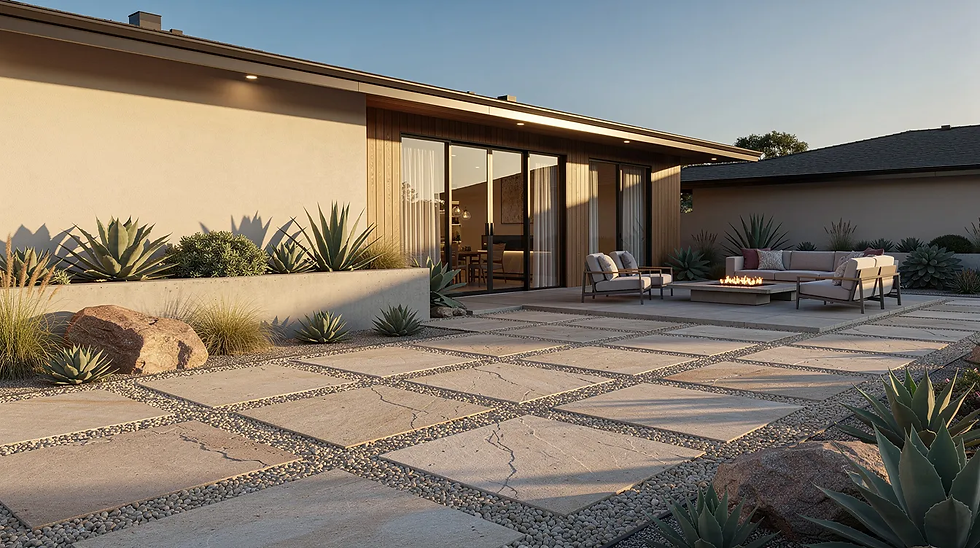
Use gravel, river rock, decomposed granite, concrete, interlocking pavers, and stone near the house. A 3–5 foot gravel band around the foundation, paver seating area outside sliding doors, or masonry planter with drip-irrigated plants can reduce continuous fuel while improving daily function.
Replace Wood Mulch Near Structures
Avoid fine, stringy mulch such as shredded bark near homes, fences, decks, vents, and wood gates. Rock mulch, crushed stone, gravel mulch, and DG are better choices near Zone 0. Farther out, organic mulch may be used more strategically to retain moisture, but it should not create an uninterrupted fuel path.
Space Plants Instead of Creating Dense Masses
Continuous planting can become a “fuel runway” toward the home. Group plants in islands separated by stone, DG, brick pathways, or low groundcovers. Careful plant layout is just as important as choosing fire resistant plants.
Choose Lower-Fuel Planting Areas
Place higher-moisture, lower-fuel plants closer to the home where allowed, and keep higher-fuel plant species farther away. Fire safe plants California homeowners often like include agave, aloe, stonecrop, yarrow, California fuchsia, and selected native grasses kept short. Avoid large masses of resinous, oily, or fine-leaved plants near structures.
Keep Trees Pruned and Maintained
Properly maintained oak trees, coast live oak, sycamore, and ornamental trees can provide shade, habitat value, and beauty while supporting wildfire defensible space landscaping. Remove dead branches, dead wood, and limbs touching roofs, chimneys, or upper stories. Landart Builders’ tree services can help inspect clearance, health, and structure before peak fire season.
Reduce Ladder Fuels
Fire ladders are layers of vegetation that allow fire to climb from dry grass into shrubs and then into tree canopies. Tall grass under shrubs, shrubs under lower branches, and piles of pruning debris under trees can all increase fire spread. Removing dead material and maintaining separation is especially important on hillsides.
Add Drip Irrigation and Smart Controllers
Irrigating strategically is essential for keeping fire-safe plants hydrated, as dehydrated plants lose their fire-resistant capabilities. Healthy plants with high moisture content are less likely to ignite, making proper irrigation and maintenance critical for fire resistance in landscaping.
Drip irrigation, smart controllers, and hydrozones help conserve water while keeping plants healthy. This is the core of drought tolerant fire safe landscaping: grouping plants by water needs so California native, Mediterranean, and drought tolerant plants receive the right amount of water without runoff.
Use Retaining Walls and Terracing on Slopes
Using hardscaping features like brick pathways, retaining walls, and decorative rocks can create firebreaks that help slow down or prevent the advance of wildfires. Incorporating hardscaping features like gravel, stone, and brick pathways can act as firebreaks, slowing down or preventing the advance of wildfires.
On steep lots in Malibu, Calabasas, and Thousand Oaks, stone walls, terraces, and steps also help control erosion and improve access. Professionally engineered walls, drainage, and grading are essential for long-term stability.
Keep Leaves and Debris Away from the House
Regular maintenance of a fire-smart landscape includes clearing away dead or dry vegetation, keeping gutters and roofs free of debris, and monitoring the overall condition of the landscape to ensure its effectiveness against wildfires. Remove dead leaves, pine needles, and dry debris from roof valleys, gutters, wall corners, decks, and foundations.
Create Clean Walkways and Access Paths
Concrete, pavers, DG, and stone paths help residents, maintenance crews, and firefighters move around the property. Keep access paths free of overhanging shrubs, lower branches, and clutter. They also create attractive breaks between planting areas.
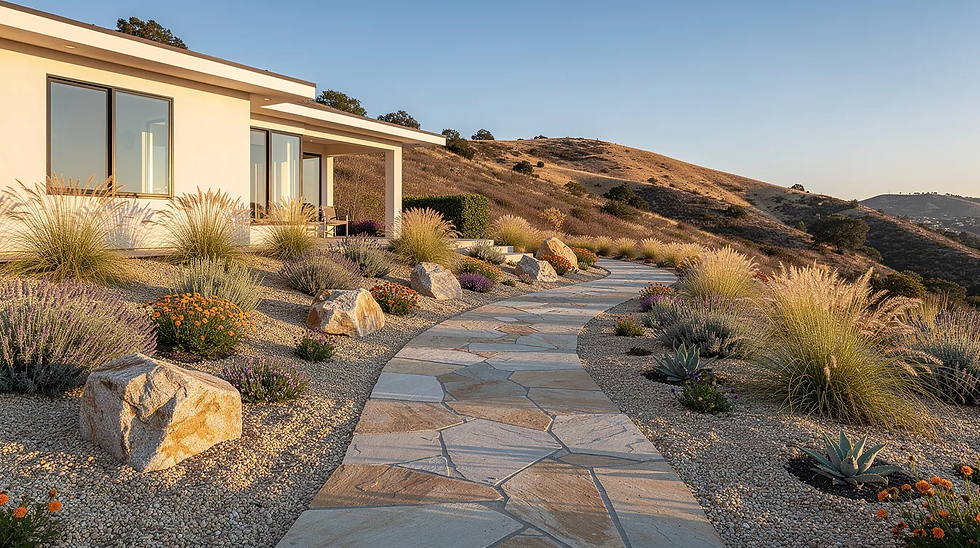

Fire-resistant plants are those that do not readily ignite from flames or other ignition sources, and their foliage and stems do not significantly contribute to the fuel and intensity of a fire. Still, no plant is completely fireproof, and any plant can catch fire during extreme conditions.
Key plant characteristics include high moisture content, thicker leaves, low resin or oil content, minimal dead material, and an open structure that does not trap debris. The condition of a plant, including its moisture content and maintenance, is often more important than its species when it comes to fire resistance; well-maintained plants can be less flammable than neglected ones.
Native plants adapted to California’s climate, such as Lemonade Berry, Sugar Bush, and Coyote Brush, are often recommended for fire-resistant landscaping due to their drought tolerance and relatively low flammability. Other useful choices may include toyon, california lilac, native buckwheats, succulents, and low-growing manzanita cultivars. Fire-resistant plants should be sourced from local guides that recommend species appropriate for the specific fire risks in an area.
Before buying, review fire resistant plant lists from reputable sources such as UC Agriculture and Natural Resources or a local nursery familiar with your microclimate. In some regions, a resource conservation district may also provide local plant guidance. Choosing plants for northern california may differ from choosing plants for coastal Malibu, inland Simi Valley, or the Santa Monica Mountains.

Drought tolerant and fire-smart design can work together when planned correctly. The goal is not to overwater the landscape, but to keep plants healthy enough to resist ignition better than stressed, brittle vegetation.
A strong plan uses hydrozoning, drip irrigation, well draining soil, DG, boulders, and thoughtful mulch placement. Organic mulch can help retain moisture in outer zones, while rock, gravel, and decomposed granite are better near structures. Seasonal flowering annuals may be used selectively, but they should be removed when dry.
Effective fire-smart landscaping requires establishing defensive zones, incorporating hardscaping, and choosing low-resin, high-moisture native plants that align with local fire department regulations.

Hardscape can make a yard more useful and support fire safe design. Concrete patios, porcelain pavers, natural stone, masonry walls, gravel, DG, and stone edging can separate planting beds from structures and walkways.
Consider a paver patio off the family room, a masonry outdoor kitchen island, a paved pool deck, stone borders around flower beds, or a seating area surrounded by gravel. Ignition resistant materials and noncombustible surfaces are especially helpful in Zone 0 and Zone 1.
Landart Builders Inc specializes in integrated hardscape, masonry, landscape construction, lighting, irrigation, and drainage-ideal for complex fire resistant landscape projects that must also look refined.

Hillside homes in Malibu, Agoura Hills, Calabasas, Thousand Oaks, and Ventura County need extra care because slopes can intensify fire behavior and erosion risk. Terraces, retaining walls, stairways, and DG paths can break up fuels while improving maintenance access.

Use deep-rooted California native plants and groundcovers as “soil keepers,” but keep them separated and properly maintained. Coordinate irrigation by pressure zones so slopes receive water efficiently without runoff. Creating a fire-smart landscape involves strategic landscaping techniques that mitigate wildfire risks, such as proper plant placement and the use of non-combustible materials.

Common mistakes include using wood or shredded bark mulch directly against the house; letting leaves collect in gutters, corners, and under decks; planting dense shrubs under windows; allowing climbing plants or vines onto walls and eaves; ignoring dead branches; leaving dry grasses uncut; storing firewood against the house; and letting propane tanks sit in overgrown areas.
Irrigation mistakes matter too. Broken sprinklers, clogged drip emitters, and outdated controller schedules can leave plants stressed or overgrown. Brush clearance once a year is not enough for wildfire safe landscaping California properties. Walk your yard at least twice a year with a “fuel” mindset, or schedule a professional inspection with a landscape contractor.

Wildfire safe landscaping does not mean bare spaces or a gravel-only yard. A premium fire safe design can include wide paver patios, clean concrete pool decks, boulders, linear planting beds, low-voltage lighting, succulents, ornamental grasses, native shrubs, and curated color.
The goal is thoughtful plant selection, open spacing, durable materials, and cultural practices that keep the landscape healthy. Covered patios, outdoor kitchens, seating nooks, and fire features can be designed with proper clearances and appropriate materials so safety and luxury feel connected.

Landart Builders Inc helps homeowners in Thousand Oaks, Westlake Village, Calabasas, Agoura Hills, Malibu, Simi Valley, Camarillo, Hidden Hills, Ventura County, Los Angeles County, and nearby Southern California communities plan fire smart landscaping ideas around real property conditions.
Our team reviews defensible space zones, slopes, existing trees, hardscape, irrigation, drainage, outdoor living priorities, and maintenance costs. From design and permitting support to construction, masonry, irrigation, lighting, tree services, and maintenance, we can help create a cohesive plan built with craftsmanship and attention to detail.
Call Landart Builders Inc or request a free initial consultation to discuss fire smart landscaping ideas tailored to your home. Fire-smart landscaping can help reduce fire risk, but homeowners should also coordinate with local fire authorities and building professionals for a complete safety strategy.

Here are common questions Landart Builders hears from California homeowners about fire prevention, defensible space, and fire safe landscaping.
What is fire-smart landscaping?
Fire-smart landscaping is a design and maintenance approach that helps reduce wildfire risk by managing plants, hardscape, spacing, irrigation, and debris around structures. It combines beauty, outdoor living, and fire prevention landscaping.
What is defensible space landscaping?
Defensible space landscaping California guidelines divide the area around structures into Zone 0, Zone 1, and Zone 2. Maintaining a defensible space around homes, which includes creating zones with varying vegetation density and using non-combustible materials, is crucial for fire-smart landscaping.
What is Zone 0 around a house?
Zone 0 is the ember-resistant area within the first 0–5 feet of the structure. This area should minimize vegetation, mulch, combustible furniture, and other combustible materials while emphasizing gravel, stone, concrete, and masonry.
Are there fire-resistant plants for California homes?
Yes, there are many fire resistant plants California homeowners can consider, including toyon, California lilac, succulents, and selected native plants. However, any plant can burn, so spacing, pruning, irrigation, and maintenance are essential.
Can fire-smart landscaping also be drought-tolerant?
Yes. Drought tolerant fire safe landscaping uses California natives, hydrozoning, drip irrigation, smart controllers, gravel, DG, and selective mulch to conserve water while supporting plant health.
What hardscape materials are good for fire-smart landscaping?
Concrete, pavers, natural stone, gravel, decomposed granite, brick pathways, masonry borders, and retaining walls are useful noncombustible surfaces near homes and along access paths.
How often should I maintain a fire-smart landscape?
At minimum, schedule seasonal maintenance in spring and late summer or early fall. Ongoing tasks include pruning, weed control, leaf removal, irrigation checks, gutter cleanup, and removal of dry debris.
Do I need a professional for fire-smart landscape design?
Homeowners can handle small cleanup tasks, but a professional design-build landscape contractor like Landart Builders Inc can integrate planting, hardscape, drainage, irrigation, lighting, tree care, and code-aware planning into one complete design.

Fire-smart landscaping, defensible space, and fire safe yard practices can help reduce wildfire risk but cannot guarantee that a structure will be protected in every fire event.
Homeowners should verify current defensible space, brush clearance, zoning, HOA rules, city and county ordinances, and local fire department or CAL FIRE requirements before construction or significant landscape changes. This article is for general educational purposes and does not replace property-specific advice from qualified fire, engineering, or building professionals.


Comments