
Hydroseeding in Ventura & Los Angeles: Cost, Benefits, and Professional Services
- Martin Romero
- Apr 4
- 15 min read

Establishing a beautiful lawn or stabilizing erosion-prone slopes in Southern California requires more than just scattering grass seed and hoping for the best. Many homeowners and commercial property managers are discovering that hydroseeding offers the perfect solution for creating stunning lawns, controlling erosion, and achieving vibrant turf coverage at a fraction of sod costs. This guide covers everything you need to know about hydroseeding services in Ventura and Los Angeles counties—from realistic pricing and grass selection to the step-by-step process and professional aftercare that transforms your outdoor space into the dream yard you’ve envisioned.
What Is Hydroseeding?
Hydroseeding is a professional lawn seeding and erosion control method that Landart Builders Inc uses extensively throughout Ventura and Los Angeles counties. This technique delivers consistent, efficient results for properties ranging from residential backyards to large-scale commercial construction sites and challenging hillsides.
At its core, hydroseeding involves creating a specialized slurry that combines several key ingredients:
Grass seed (or other vegetation depending on the project)
Fiber mulch (typically wood-based cellulose or recycled paper fibers)
Fertilizer to jumpstart growth
Tackifier (a bonding agent like guar gum or polymers)
Water as the carrier medium
This mixture is loaded into specialized equipment and sprayed directly onto prepared soil under pressure. The result is uniform coverage that traditional seeding methods simply cannot match.
The mulch mat that forms after application serves multiple critical functions. It retains significantly more moisture than bare soil—studies show up to 90% better moisture retention—while simultaneously protecting seed from wind erosion, harsh UV radiation, and hungry birds. The protective layer also reduces raindrop impact that causes runoff on slopes and suppresses weed germination by blocking light from reaching competing seeds.
Under optimal conditions, property owners can expect to see germination within 7-14 days, with full turf establishment occurring in approximately 3-6 weeks. This timeline dramatically outperforms dry broadcast seeding, which typically produces patchy coverage and higher failure rates, especially on slopes.
Landart Builders uses truck-mounted hydroseeders that prove ideal for accessing hillsides throughout Thousand Oaks, Simi Valley, Malibu, Santa Clarita, and other challenging terrain across the region. These professional-grade machines maintain even slurry distribution through continuous agitation, preventing settling and ensuring consistent application.
Understanding the Difference: Hydroseeding vs. Hydromulching
A common point of confusion involves distinguishing hydroseeding from hydromulching. The key distinction is straightforward:
Method | Contains Seed? | Primary Purpose |
Hydroseeding | Always | Vegetation establishment |
Hydromulching | Not necessarily | Erosion control and soil stabilization |
Hydromulching applies mulch, tackifier, and sometimes fertilizer without seed, serving purely as erosion control—often used on construction sites or post-fire recovery where vegetation establishment isn’t the immediate goal.
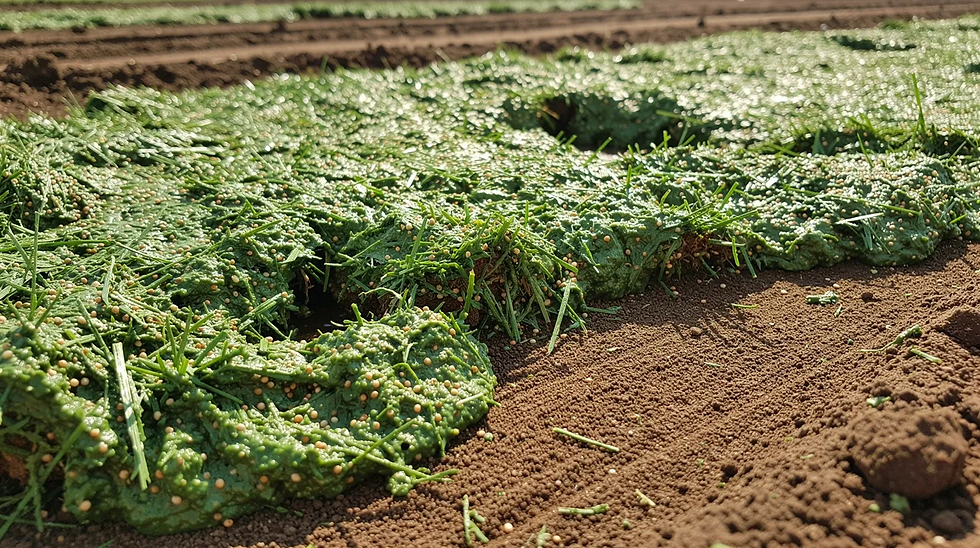
Visually, a completed hydroseeding job appears as a vibrant green coating uniformly blanketing the soil. You’ll notice clean, precise edges around hardscapes, patios, pools, and planting beds. The application creates a consistent appearance without the stripes or bare patches common with other methods.
Hydroseeding vs Sod vs Traditional Seeding
Choosing the right method for establishing turf in Southern California requires weighing cost, installation speed, and long-term performance against your specific property conditions. Here’s how the three main options compare for homeowners and property managers across the region.
Sod Installation
Sod delivers an instant green yard. Pre-grown grass mats arrive rolled like carpet and are laid directly onto prepared soil, providing immediate aesthetic appeal and usability. For homeowners who need results yesterday—perhaps before an event or property sale—sod is hard to beat.
However, sod carries the highest upfront cost, typically ranging from $0.30 to $0.80 per square foot including labor. For properties exceeding 5,000 square feet, logistics become challenging due to the weight of materials, tight delivery windows, and the risk of transplant shock during Ventura and LA’s hot months. Sod also requires significant ongoing maintenance to establish roots in its new environment.

Traditional Dry Seeding
Hand or broadcast seeding offers the lowest material costs at roughly $0.05-$0.10 per square foot. For flat, small areas with ideal conditions, it can work adequately.
The reality for most Southern California properties is different. Traditional seeding suffers the highest failure rates due to:
Poor seed-to-soil contact
Erosion during rain events (especially problematic on slopes)
Aggressive weed competition
Seed dormancy in arid conditions
Many property owners attempting the traditional process find themselves reapplying multiple times, ultimately spending more than they would have with professional hydroseeding.
Hydroseeding: The Middle Ground
Hydroseeding positions optimally between these extremes. It costs roughly 50-70% less than sod installation while delivering far superior results compared to dry seeding. The method excels particularly in situations where sod struggles:
Large area coverage (5,000+ square feet)
Slopes and hillsides
Properties with limited access
Budget-conscious projects requiring professional results
For a 10,000 square foot lawn in Camarillo or Westlake Village, hydroseeding typically delivers a full, healthy turf stand in about 3-6 weeks with proper watering—compared to the immediate but expensive results of sod or the uncertain, often patchy outcomes of broadcast seeding.
Landart Builders helps homeowners and HOAs choose the best method based on slope conditions, existing irrigation, budget parameters, and desired timeline. Sometimes a combination approach works best—perhaps sod for high-visibility front areas and hydroseeding for larger backyard spaces.
Hydroseeding Cost in Ventura & Los Angeles Counties
Local pricing for hydroseeding depends on several factors including property access, slope severity, and seed mix selection. Understanding realistic ranges helps property owners budget appropriately and compare quotes confidently.
Residential Pricing Estimates (2024-2025)
For standard lawn mixes in Ventura and Los Angeles counties, expect costs in the range of $0.12 to $0.28 per square foot. This variation reflects differences in:
Property accessibility
Slope conditions
Soil preparation requirements
Seed mix complexity
Here’s what typical projects might cost:
Project Size | Estimated Range |
5,000 sq ft (front/back yard) | $600 - $1,400 |
10,000 sq ft residential | $1,200 - $2,800 |
15,000 sq ft HOA common area | $1,800 - $4,200 |
Factors That Increase Cost
Steep slopes in areas like Pacific Palisades, Agoura Hills, and Malibu typically increase project costs by 20-50%. This reflects:
Specialized access equipment requirements
Enhanced tackifiers for slope stability
Additional erosion blankets or netting
More complex application techniques
Specialty seed mixes—whether native grasses, drought-tolerant blends, or sports-turf varieties—can add 10-30% to material costs. However, these mixes often pay back their premium through lower water use (up to 50% reduction once established) and reduced long-term maintenance.
Getting an Accurate Quote
Landart Builders offers free on-site estimates for properties throughout Ventura and Orange County to San Bernardino County and beyond. The consultation includes:
Precise square footage measurement
Soil condition evaluation
Slope and drainage assessment
Seed mix recommendations
Itemized written proposals
This approach ensures you understand exactly what you’re paying for before any work begins.
Best Grasses and Seed Mixes for Southern California Hydroseeding
Selecting the right grass varieties fundamentally impacts your lawn’s appearance, water requirements, and long-term maintenance needs. Southern California’s diverse microclimates—from coastal fog zones to scorching inland valleys—demand thoughtful seed selection.
Cool-Season Blends (Coastal and Transitional Zones)
For properties in Ventura, coastal LA, and moderate-climate areas, cool-season grasses dominate professional recommendations:
Turf-Type Tall Fescue (Festuca arundinacea)
Dark green color year-round
Moderate shade tolerance
Good traffic recovery
Germination in 7-10 days
Perennial Ryegrass (Lolium perenne)
Fast establishment
Fine texture
Excellent for overseeding
Blends well with fescue
These grasses maintain their appearance through winter, providing consistent curb appeal without seasonal browning that many homeowners find unacceptable.
Warm-Season Options (Inland Areas)
For hotter inland locations like Valencia, Newbury Park, Northridge, and the San Fernando Valley, warm-season grasses offer superior heat tolerance:
Bermudagrass (Cynodon dactylon)
Exceptional heat resistance
Aggressive growth fills in quickly
Handles heavy traffic well
Winter dormancy (turns brown October-March)
Hybrid Bermuda Varieties
Finer texture than common bermuda
Dense growth pattern
Requires overseeding for winter color
Property owners should understand that warm-season grasses naturally enter dormancy during cooler months. If year-round green is essential, plan for winter overseeding with ryegrass.
Drought-Tolerant and Low Maintenance Options
California’s ongoing water restrictions have driven development of specialized low maintenance seed mixes that significantly reduce irrigation requirements:
Eco-Lawn blends: Reduce watering by 40-60% once established
Low-water fescue varieties: Deeper root systems access subsurface moisture
Native California fescues: Adapted to local rainfall patterns
Native and Meadow-Style Blends
For larger properties, slopes, and open spaces, native plants and wild flowers offer compelling advantages:
Reduced mowing (1-2 times yearly vs. weekly)
Support for pollinators and local wildlife
Compliance with local sustainability ordinances
Natural aesthetic fitting California landscapes
Landart Builders matches seed varieties to sun exposure, soil pH (ideally 6.0-7.0), irrigation system type, and intended use—whether that’s a family lawn seeing daily activity, a dog run requiring durability, commercial turf, or HOA greenbelts.

Applications: Lawns, Overseeding, Slopes, and Native Revegetation
Hydroseeding’s versatility makes it suitable for projects ranging from intimate residential spaces to massive commercial developments spanning multiple acres. Understanding the full range of applications helps property owners recognize opportunities where this method excels.
New Lawn Installation
For custom homes in Oak Park, Calabasas, Ventura, and throughout the region, hydroseeding delivers uniform coverage that integrates seamlessly with surrounding landscape elements. The method creates clean, precise edges around:
Patios and outdoor living spaces
Pool decks and surrounding hardscape
Masonry features and walkways
Existing planting beds and specimen trees
This precision matters particularly for properties where Landart Builders has completed complementary construction—retaining walls, masonry patios, or drainage systems—and wants to protect that investment with proper turf establishment.
Overseeding Thin or Damaged Lawns
Not every project requires starting from scratch. Hydroseeding effectively renovates existing yards suffering from:
Thin, patchy coverage
Disease or pest damage
Fire damage from wildfires
Drought stress from water restrictions
Overseeding with hydroseeding can achieve 70-80% improvement in turf density without the expense and disruption of complete lawn removal. This approach proves ideal for older properties, rental communities, and HOAs looking to refresh common areas economically.
Erosion Control on Slopes
Hillside properties throughout Southern California face constant erosion challenges. Hydroseeding addresses these concerns on:
Embankments and cut slopes
Drainage channels and swales
Areas around retaining walls
Post-grading construction sites
Fire cleanup and recovery zones
The combination of tackifiers and fiber mulch can reduce runoff by 80-90%, protecting property investments and preventing expensive rework. For hillsides in high-risk zones, Landart Builders often combines hydroseeding with rock swales, French drains, jute netting, or straw wattles for comprehensive stabilization.
Native Revegetation Projects
Commercial campuses, utility easements, and open spaces increasingly require native revegetation to comply with California Department guidelines and local ordinances. These projects use native grasses and wild flowers that:
Require minimal irrigation once established
Support local ecosystems and pollinators
Reduce long-term maintenance costs
Meet regulatory requirements
Landart Builders integrates hydroseeding with broader landscape construction, ensuring that drainage systems, retaining walls, and irrigation infrastructure work together to support healthy, lasting vegetation.
Hydroseeding Process: Step-by-Step
Understanding the professional hydroseeding process helps clients know what to expect before, during, and after their project. Proper execution at each stage directly impacts long-term results.
Pre-Construction Planning
Before any equipment arrives, thorough preparation ensures project success:
On-site consultation: Technicians assess the property, identify challenges, and discuss goals
Measuring: Precise square footage calculation for accurate pricing and material quantities
Soil testing: pH and nutrient analysis when conditions warrant (ideally targeting 6.0-7.0 pH)
Layout planning: Marking areas to protect around hardscapes, trees, pools, and planting beds
This planning phase prevents surprises and establishes clear expectations for all parties.
Soil Preparation
Quality results require proper soil preparation—skipping this step is the most common cause of hydroseeding failure:
Rough grading: Establishing basic contours and positive drainage
Debris removal: Clearing rocks, construction materials, and organic matter
Topsoil addition: 2-4 inches of quality topsoil for poor native soils
Fine grading: Creating smooth seedbed with proper drainage away from foundations and patios
For properties with significant soil challenges, amendments may include lime (for acidic soils), sulfur (for alkaline conditions), or organic matter to improve structure.
Slurry Preparation
The hydroseeder tank receives carefully measured components:
Component | Typical Proportion |
Water | ~90% |
Fiber mulch | 5-10% |
Seed | 0.5-1% |
Fertilizer | 0.5-1% |
Tackifier | 0.5-1% |
The tank’s agitation system maintains continuous mixing, preventing heavier materials from settling and ensuring uniform distribution throughout application.
Application
Professional application follows established best practices:
Technicians spray from a high pressure hose connected to the hydroseeder
Application pressure typically ranges from 1,500-2,500 PSI
On slopes, spraying begins at the top and works downward
Overlapping passes prevent stripes and bare patches
Green dye in the mix provides visibility for uniform coverage
Immediate Post-Application
Once spraying completes, the team:
Sets initial irrigation schedules (light, frequent watering)
Marks off areas to exclude foot traffic and pets
Provides written care instructions specific to the seed mix
Schedules follow-up inspection if included in the service package
Hydromulching and Erosion Control for Hillsides
While hydroseeding focuses on vegetation establishment, hydromulching serves a distinct purpose: stabilizing soil and controlling erosion with or without incorporating seed. This distinction matters particularly for Southern California’s challenging terrain.
How Hydromulch Protects Soil
Hydromulch creates a protective blanket over exposed soil that:
Reduces rain impact by up to 95%
Minimizes dust by approximately 99%
Decreases surface runoff velocity
Maintains soil temperature for better conditions
These properties prove crucial after grading, during construction, or following wildfire damage when exposed soils are most vulnerable to erosion during rain events.
Specialized Materials for Steep Slopes
For steep embankments along driveways, retaining walls, and roadway cut slopes, the team may specify:
Enhanced tackifiers: Stronger bonding agents for extreme angles
High-fiber mulches: Greater coverage and erosion resistance
Bonded Fiber Matrix (BFM): Water-resistant polymers for slopes up to 1:1 ratios
These materials form a crust that remains stable even during heavy rainfall, protecting investments in grading and construction.
Integration with Drainage Systems
Hydromulching works most effectively when paired with proper drainage infrastructure. Landart Builders designs and builds complementary systems including:
Rock swales directing water flow
French drains managing subsurface moisture
Concrete or stone retaining walls
Strategic grading for positive drainage
Additional Erosion Control Measures
For high-risk hillsides, comprehensive erosion control may include:
Erosion control blankets (biodegradable or synthetic)
Jute netting for temporary stabilization
Straw wattles to slow runoff velocity
Terracing to break slope length
Professional design and proper installation significantly reduce washouts, rework costs, and potential property damage. Property owners investing in hillside stabilization should work with contractors experienced in the full range of erosion control techniques—not just hydroseeding alone.
Hydroseeding and Sustainable Landscaping
Sustainability has become central to landscape planning in drought-prone Ventura and Los Angeles counties. Hydroseeding aligns with sustainability goals through multiple mechanisms that reduce water consumption and environmental impact.
Water-Efficient Seed Selection
Drought tolerant and native seed mixes require fewer irrigation cycles once root systems establish. Well-selected varieties can reduce long-term water use by 40-60% compared to traditional turf grasses—meaningful savings given ongoing water restrictions and rising utility costs.
Enhanced Moisture Retention
The fiber mulch component in hydroseeding slurry improves water retention and soil structure in ways that benefit lawns throughout their lifespan:
Mulch fibers can hold 400-600% of their weight in water
Organic materials break down and improve soil biology
Better soil structure reduces compaction over time
Enhanced moisture availability during hot Santa Ana wind conditions
Smart Irrigation Integration
Hydroseeding works best when paired with modern irrigation technology:
Weather-based controllers: ET (evapotranspiration) controllers can cut water use by 30%
Drip zones: Efficient watering for trees and shrub areas
High-efficiency nozzles: Reduced waste on turf zones
Rain sensors: Automatic shutoff during precipitation
Reduced Environmental Impact
Compared to some traditional lawn establishment methods, hydroseeding offers environmental advantages:
Minimal soil disturbance preserves existing soil biology
Reduced erosion means less sediment reaching local creeks and waterways
Native mixes support local ecosystems and pollinators
Lower ongoing maintenance reduces equipment emissions
Landart Builders designs complete outdoor environments that balance lush appearance with water-wise practices and compliance with local regulations—proving that beautiful landscapes and responsible resource use aren’t mutually exclusive.
Aftercare: Watering, Mowing, and Maintenance
Proper aftercare during the first 6-8 weeks determines whether your hydroseeding investment thrives or fails. This period requires more attention than established lawns, but the effort pays off with decades of healthy turf.
Watering Schedule for Southern California
The irrigation approach evolves as grass establishes:
Weeks 1-3: Establishment Phase
Water 3-4 times daily
Light applications (10-15 minutes per cycle)
Goal: Keep mulch mat consistently moist, never dry or waterlogged
Total weekly target: 1-1.5 inches
Weeks 3-6: Transition Phase
Reduce frequency to 2 times daily
Increase duration slightly
Begin developing deeper root systems
Weeks 6+: Mature Watering
Transition to deeper, less frequent cycles
Standard lawn irrigation schedules apply
Adjust for seasonal conditions and rainfall
First Mowing
Wait until grass reaches approximately 3-4 inches before the first mow. When that day arrives:
Use sharp mower blades (dull blades tear new grass)
Remove no more than one-third of blade height
Make slow turns to avoid rutting soft soil
Avoid mowing when grass is wet
Fertilization
The initial slurry includes starter fertilizer, but follow-up feeding supports continued development:
First application typically at 4-6 weeks post-germination
Use fertilizer appropriate for the seed mix (often 16-20-0 NPK ratios)
Follow soil test recommendations when available
Avoid over-fertilization, which stresses young plants
Traffic Restrictions
Perhaps the most important aftercare element: keep people, pets, and equipment off hydroseeded areas during early establishment.
Minimum 3 weeks for foot traffic
4-6 weeks before normal use
Longer for heavy equipment or vehicles
Premature traffic causes compaction, bare spots, and uneven establishment that requires expensive correction.
Ongoing Maintenance Services
Landart Builders offers ongoing landscape maintenance packages that protect your hydroseeding investment:
Regular mowing with proper equipment
Seasonal fertilization programs
Weed management and spot treatment
Irrigation system monitoring and adjustment
Annual aeration and overseeding
Hydroseeding for Residential vs Commercial & HOA Properties
Landart Builders serves both homeowners seeking personal outdoor transformations and larger commercial or multifamily properties requiring professional-grade turf establishment across Ventura and LA.
Residential Projects
Typical residential hydroseeding encompasses:
New construction: Lawns around custom homes from 2,000 to 15,000 square feet
Lawn replacement: Removing struggling turf and starting fresh
Pool remodels: Integrating new lawn areas with updated outdoor living spaces
Fire recovery: Restoring vegetation after wildfire damage
Residential projects emphasize aesthetics, family functionality, and integration with existing landscape features. Homeowners typically want their yard ready for use as quickly as possible while staying within budget.
Commercial and HOA Applications
Larger-scale projects present different priorities:
Business parks: Professional appearance for tenant attraction
Apartment communities: Durable common areas handling heavy foot traffic
School fields: Uniform coverage for recreational use
Roadway edges: Erosion control along driveways and parking areas
These projects require uniform, durable turf coverage that maintains appearance despite intensive use.
Scheduling and Staging Considerations
Commercial work demands careful planning around:
Tenant access and parking requirements
Phased installation to maintain property function
Coordination with other trades and contractors
Access to water sources for mixing and irrigation
Safety protocols for active properties
Bundled Services
For both residential and commercial clients, Landart Builders combines hydroseeding with full landscape construction packages:
Masonry (patios, walkways, retaining walls)
Outdoor living areas (pergolas, fire features, kitchens)
Landscape lighting
Tree planting and establishment
Irrigation system installation
Maintenance Contracts
Long-term maintenance contracts help HOAs and commercial clients protect their hydroseed investment through many seasons. Regular professional care prevents small problems from becoming expensive repairs while maintaining property values and tenant satisfaction.
Why Choose Landart Builders Inc for Hydroseeding
Landart Builders Inc stands as a full-service landscape contractor serving Ventura and Los Angeles counties with residential and commercial landscape construction, masonry, maintenance, and tree services. The team transforms outdoor spaces through enduring craftsmanship built on integrity, leadership, passion, and a vision toward excellence.
Local Expertise Matters
Unlike national chains or inexperienced contractors, Landart Builders brings deep knowledge of local conditions:
Soil types from coastal Oxnard and Ventura to inland West Hills and Sherman Oaks
Slope challenges specific to hillside communities
Microclimate variations affecting grass selection
Water restrictions and sustainability requirements
This expertise translates directly to better outcomes and fewer callbacks.
Integrated Design-Build Services
Hydroseeding rarely exists in isolation. Properties typically need complementary work:
Grading and drainage systems
Retaining walls and erosion control structures
Masonry patios and walkways
Irrigation installation or upgrades
Ongoing maintenance
Working with a single contractor who handles all elements ensures coordination, consistent quality, and streamlined communication.
Quality and Craftsmanship
Every Landart Builders project reflects attention to detail:
Clean lines around hardscapes and planting beds
Careful protection of existing features
Reliable scheduling and communication
Professional crew conduct on your property

Getting Started
The process begins with a free on-site consultation. The team will:
Inspect your property conditions
Take precise measurements
Discuss goals and timeline
Recommend appropriate seed mixes
Provide itemized written proposals
Contact Landart Builders to schedule your consultation and take the first step toward the vibrant, healthy lawn your property deserves.
Frequently Asked Questions About Hydroseeding
Property owners considering hydroseeding often share similar questions. Here are answers to the most common concerns we hear from clients throughout Ventura and Los Angeles counties.
How long does it take hydroseeded grass to grow in Southern California conditions?
Under proper irrigation, expect initial sprouting within 7-21 days depending on seed variety, soil temperature, and moisture consistency. Cool-season grasses like turf-type tall fescue typically germinate faster (7-10 days) than warm-season options like bermudagrass.
Full lawn establishment—meaning dense, usable turf—generally takes 3-6 weeks with consistent watering and proper aftercare. Factors that slow establishment include inadequate irrigation, premature foot traffic, extreme heat, and poor soil preparation. Properties with ideal conditions during spring or fall often see faster results than summer installations.
What is the best time of year to hydroseed in Ventura and Los Angeles?
Two seasonal windows produce optimal results:
Fall (September-November): The preferred season for cool-season grasses. Moderate temperatures, reduced weed competition, and winter rains help establish deep root systems before summer stress arrives. Grass enters spring already mature and ready for active growth.
Spring (February-April): A solid second choice, particularly for properties that missed the fall window. Avoid late spring installations that push germination into summer heat, which stresses young plants and increases water requirements dramatically.
Summer hydroseeding is possible but requires significantly more irrigation and careful management to prevent heat stress. Winter installations work for some warm-season grasses but slow germination rates make spring preferable.
Can hydroseeding be done on very steep slopes?
Yes, with appropriate techniques and materials. Professional applicators successfully hydroseed slopes up to 1:1 ratios (45 degrees) using:
Enhanced tackifiers with water-resistant polymers
Bonded Fiber Matrix (BFM) mulches
Complementary erosion control blankets or jute netting
Strategic application patterns starting from slope summits
Limitations exist for near-vertical surfaces or unstable soils, where terracing or structural solutions may be necessary before hydroseeding. Landart Builders evaluates slope conditions during consultation and recommends appropriate stabilization strategies.
Will hydroseeding work if my property has poor soil?
Soil quality significantly impacts hydroseeding success, but poor native soil doesn’t disqualify properties from excellent results. The solution involves proper preparation:
Topsoil addition: 2-4 inches of quality topsoil over problem areas
Soil amendments: Lime for acidic soils, sulfur for alkaline conditions
Organic matter: Improving structure and water retention
Proper grading: Ensuring drainage prevents waterlogging
Soil testing before installation identifies specific deficiencies that amendments can address. The small additional investment in soil preparation pays dividends through better germination, stronger establishment, and reduced long-term maintenance free of constant reseeding.
Do I need an irrigation system before hydroseeding?
Consistent water is absolutely critical during germination and establishment. While manual watering with hoses can technically work for small areas, it rarely provides the consistency needed for professional results.
For most projects, Landart Builders recommends installing irrigation systems before hydroseeding. This ensures:
Uniform coverage across the entire area
Automated scheduling for multiple daily cycles
Consistent moisture levels regardless of homeowner availability
Long-term infrastructure for ongoing lawn care
For properties without existing irrigation, Landart Builders can install systems as part of a comprehensive project that includes hydroseeding, giving you confidence that your investment will thrive from day one.
Whether you’re establishing a new lawn around a custom home, restoring fire-damaged hillsides, or creating durable turf for commercial properties, professional hydroseeding delivers the uniform coverage and lasting results that Southern California properties demand. The method combines expert service with cost efficiency, creating stunning lawns that enhance property values and outdoor living enjoyment for years to come.
Ready to transform your outdoor space? Contact Landart Builders Inc today for your free on-site consultation. Our team will evaluate your property, discuss your vision, and provide a detailed proposal tailored to your specific conditions and budget. Take pride in a landscape built with craftsmanship and backed by local expertise—reach out now to get started.
Need help with your landscape project? Contact us now! https://www.landartbuilders.org/contact


Comments