
Landscape Maintenance Services in Los Angeles
- Martin Romero
- Apr 3
- 15 min read

Updated: Apr 4
Complete Landscape Maintenance Guide: Gas vs Electric & Total Property Care
Landscape Maintenance Is More Than Just Lawn Care
A common misconception is that landscape maintenance simply means mowing the lawn. In reality, landscape maintenance is a comprehensive care system involving multiple interdependent components that keep your entire property healthy and attractive. The landscape includes softscape elements like plants, turf, and trees, as well as infrastructure such as irrigation and drainage systems, hardscape features, wood structures, metal elements, and lighting systems.
Failure or neglect in any one system—say, a malfunctioning irrigation system or poor drainage—can lead to damage in others, including plant loss, soil erosion, or hardscape shifting. Effective landscape maintenance requires an integrated approach that addresses all these elements as parts of a complete property system.
Gas vs Electric Landscape Maintenance Equipment (Professional Perspective)
Gas Equipment
Gas-powered landscaping equipment delivers high torque and power, making it ideal for demanding tasks such as managing overgrown properties, commercial sites, and large turf areas. The robust performance allows professionals to tackle heavy-duty jobs efficiently.
However, gas equipment has downsides including emissions that contribute to air pollution, noise restrictions especially stringent in California, and the need for regular maintenance like spark plug replacement, carburetor tuning, and fuel system upkeep.

Electric Equipment
Electric landscaping tools are well-suited for HOAs, residential neighborhoods, and noise-sensitive areas. Their quiet operation and reduced emissions make them environmentally friendly choices, and they require less maintenance compared to gas-powered alternatives.
Limitations include battery runtime constraints and less power for heavy clearing or large-scale commercial jobs, which can reduce efficiency for certain applications.
Hybrid Approach (Best Practice)
Professional landscapers often adopt a hybrid approach, using both gas and electric equipment depending on the specific job requirements. This strategy balances power and efficiency with environmental considerations, ensuring optimal results across diverse property types.
Irrigation System Maintenance (Critical Infrastructure)
Irrigation systems are vital for landscape health and water efficiency. Proper maintenance includes:
Drip Irrigation: Flushing lines to prevent clogs, replacing emitters, and clearing calcium or debris blockages.
Sprinkler Systems: Checking head alignment, repairing broken risers, optimizing coverage to avoid water waste.
Valves: Replacing solenoids, fixing leaks, and repairing mainline PVC failures.
Backflow Preventers & Pressure Regulators: Ensuring these safety devices function properly.
Smart Controllers: Programming seasonal schedules to comply with local regulations and maximize water savings.
Maintaining irrigation systems prevents plant loss, reduces soil erosion, and supports sustainable water use—critical in drought-prone regions like Los Angeles.
Drainage System Maintenance (Often Ignored but Critical)
Drainage systems protect your property’s foundation and hardscape integrity. Key components include French drains, area drains, channel drains, and downspout drainage.
Maintenance tasks involve clearing sediment and debris, jetting clogged pipes, inspecting slope and flow to ensure proper drainage, and preventing standing water that can cause root rot or structural damage.
Neglecting drainage can lead to foundation problems, hardscape shifting, and unhealthy plants.
Natural Stone & Masonry Maintenance (Highly Detailed Section)
Types of Stone Surfaces
Flagstone
Travertine
Limestone
Slate
Granite
Manufactured stone veneer
Common Issues
Efflorescence (white mineral deposits)
Staining from organic matter, rust, or oil
Joint erosion
Cracking or shifting due to base failure
Mold, algae, and mildew buildup
Maintenance Practices
Pressure washing with correct PSI to prevent damage
Using stone-safe chemical cleaners
Re-sanding joints for pavers
Repointing mortar joints on masonry walls
Applying penetrating or enhancing sealers
Repairing loose or sunken stones
Why Stone Maintenance Matters
Proper maintenance preserves stone’s appearance, structural integrity, and property value while preventing permanent staining and costly repairs.
Pavers, Concrete & Flatwork Maintenance
Resetting pavers affected by settling
Replacing joint sand with polymeric sand to prevent weed growth
Repairing concrete cracks and cleaning surfaces
Sealing concrete to extend lifespan and prevent trip hazards
Retaining Walls & Structural Hardscape Maintenance
Regular inspections should check for leaning or bowing, drainage failures behind walls, cleaning weep holes, verifying waterproofing integrity, maintaining capstones, and servicing lighting installed under caps.
Wood & Specialty Materials (Including IPE)
IPE wood requires regular oiling and UV protection.
Decks, fences, and pergolas benefit from sealing and staining to prevent warping, cracking, rot, and insect damage.
Metal, Paint & Coatings
Maintenance includes rust removal and prevention, repainting gates, railings, and fixtures, applying protective coatings, and preserving outdoor finishes exposed to weather.
Landscape Lighting Maintenance
Routine tasks include fixture cleaning, checking wiring and connections, transformer upkeep, replacing bulbs (upgrading to LEDs when possible), and adjusting lighting angles for optimal effect.
Seasonal Landscape Maintenance (Detailed)
Spring
Startup irrigation systems
Fertilize plants and turf
Replace damaged or dead plants
Summer
Manage watering schedules carefully
Monitor for heat stress in plants
Increase service frequency as needed
Fall
Clean drains and gutters
Remove fallen leaves
Adjust irrigation for cooler weather
Winter
Conduct repairs and system inspections
Reduce irrigation schedules to prevent overwatering
Why Full-Service Landscape Maintenance Matters
A full-service landscape maintenance plan prevents major repairs and extends the lifespan of stone, concrete, irrigation systems, and other components. It protects property value and ensures safety for residents and visitors alike.
Residential vs HOA vs Commercial Maintenance
Differences include scale, service frequency, compliance requirements, and the critical need for professional oversight. HOAs and commercial properties often require more frequent and regulated maintenance compared to residential properties.
Why Choose LandArt Builders Inc.
LandArt Builders Inc. is a full-service contractor specializing in comprehensive landscape maintenance beyond gardening. Their expertise covers irrigation, drainage, stone and hardscape maintenance, and the use of both gas and electric equipment tailored to project needs. Their long-term maintenance approach ensures your property remains healthy, attractive, and compliant with local regulations.
Maintenance is not just about lawn care—it’s about caring for your entire property system. Proactive, expert maintenance preserves your investment and enhances curb appeal year-round.
Contact LandArt Builders Inc. today for a free consultation and experience the difference of total landscape care.her you own a craftsman bungalow in Echo Park or manage commercial properties along Santa Monica Boulevard, keeping your landscape looking sharp in Los Angeles takes consistent effort. The good news: reliable landscaping services are closer than you think, with same-week availability throughout the Los Angeles area.
This homeowners guide covers everything you need to know about landscape maintenance in LA—from what’s included in a standard plan to navigating drought restrictions, choosing the right provider, and keeping your outdoor space thriving through every season.
Fast, Local Landscape Maintenance in Los Angeles
Homeowners and business owners across Los Angeles can book ongoing landscape maintenance within 24-48 hours through local providers and platforms connecting you with insured crews. Whether you’re in Silver Lake, Pasadena, Burbank, or Long Beach, same-week availability extends into 2026 for most residential and commercial properties. The key is finding crews that understand your specific neighborhood—from the hillside properties of Hollywood Hills to the flat lots of West LA.
Services in Los Angeles are specifically tailored to the region’s Mediterranean climate, which brings unique challenges. With average annual rainfall around 15 inches (far below the national average of 38 inches) and prolonged dry summers, lawn care in Southern California looks different than it does elsewhere. Providers familiar with the Los Angeles area understand LADWP watering ordinances, drought cycles projected through 2026, and the realities of maintaining small-to-medium urban yards ranging from 2,000 to 6,000 square feet.
Commercial courtyards, HOA common areas, and single family homes all require different approaches, but the core services remain consistent. Here’s what a standard landscape maintenance plan typically includes:
Lawn mowing at appropriate heights for warm-season grasses
Shrub and hedge trimming every 4-6 weeks
Irrigation monitoring and smart controller adjustments
Weed control through hand-pulling and targeted applications
Seasonal cleanups including leaf cleanup and debris removal
Bed maintenance with mulch refresh and pest scouting
The best landscapers working in Los Angeles CA combine these tasks into customized programs that promise visible improvements within 30 days—greener turf, weed-free garden beds, and naturally shaped shrubs that enhance curb appeal.
What Landscape Maintenance Includes in Los Angeles
The term “landscape maintenance” often gets reduced to lawn mowing, but in Los Angeles, it covers far more. A comprehensive lawn care service addresses your lawn, plant beds, hardscape surfaces, and irrigation systems—all tuned to local water rules that have tightened significantly since 2022 drought measures took effect.
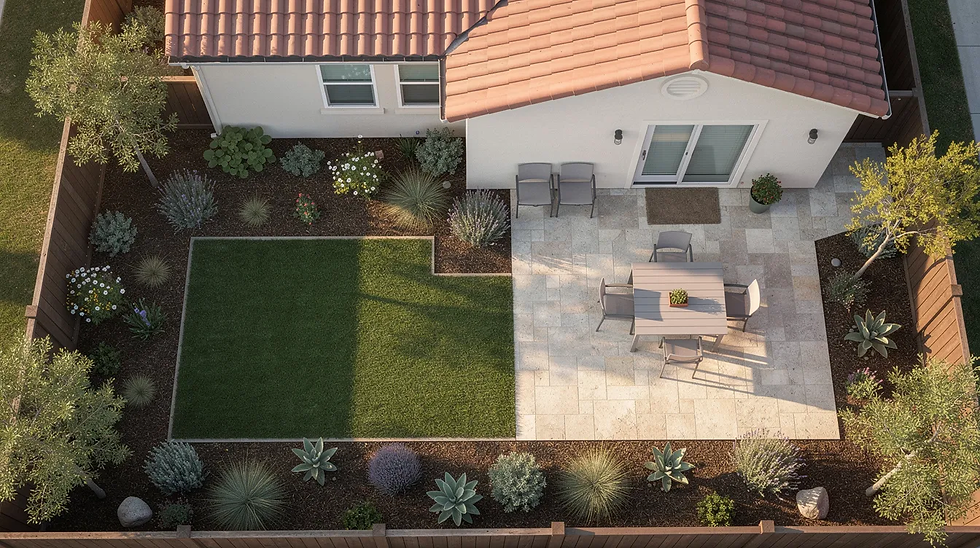
Many homeowners have expanded hardscaping services to reduce water use, adding patios, decomposed granite paths, and retaining walls. But these features still need regular attention: blowing debris, checking for drainage issues, and keeping gravel pathways weed-free. Your landscape maintenance crew should handle all of these elements, not just the green stuff.
Here’s what recurring landscape maintenance services typically include for Los Angeles properties:
Lawn Maintenance Tasks
Weekly or biweekly mowing with blade heights raised to 2.5-3.5 inches during summer to reduce heat stress
Precise edging along sidewalks, driveways, and garden beds using manual or powered edgers
String trimming around trees, fence lines, fences, and obstacles
Blowing hard surfaces free of clippings to enhance curb appeal without water waste
Seasonal dethatching or aeration for warm-season grasses like Bermudagrass
Shrub and Hedge Care
Shaping boxwood, privet, and ficus hedges every 4-6 weeks to promote dense growth
Bush trimming to prevent overgrowth into walkways and driveways
Selective pruning for bougainvillea, rosemary, and other drought-adapted shrubs
Heading back cuts limited to one-third of growth to avoid plant stress
Removal of deadwood and spent flower stalks
Tree-Related Maintenance
Palm skirt removal on Mexican fan palms and other palm trees to improve aesthetics and safety
Tree trimming and low-limb pruning on ornamental trees like crape myrtle and jacaranda to 8-10 feet clearance
Health monitoring for fruit trees and shade trees
Coordination with certified arborists for structural work on mature trees
Bed and Ground Cover Maintenance
Hand-weeding and weed removal in flower beds and garden beds
Pre-emergent herbicide applications where permitted (organic options available)
Mulch refresh at 2-3 inches depth around plants
Pest scouting for aphids, whiteflies, grubs, and spider mites
Integrated pest control that favors beneficial insects over broad-spectrum chemicals
Irrigation System Checks
Verification of drip irrigation emitters for uniform flow at 0.5-1 gallon per hour
Adjustment of spray heads to eliminate sidewalk overspray
Programming smart controllers to align with 2026 LADWP rules limiting watering to designated days
Leak detection and timer resets after power outages or daylight saving changes
A quality maintenance provider handles all these tasks systematically, ensuring nothing gets overlooked. This is what separates professional lawn services from simple yard work.
Los Angeles Climate, Drought & Seasonal Landscape Care
Los Angeles operates on a Mediterranean climate that shapes every aspect of garden maintenance. Mild, wet winters run from December through February, delivering occasional heavy rains of 4-6 inches per storm. Then come the long, dry summers from May through October, when temperatures regularly hit 90-100°F during heat waves. Understanding this cycle is essential for keeping your landscape healthy.
The 2024-2026 drought cycles have intensified focus on water conservation. LADWP enforces tiered water pricing, designated watering days, and early-morning irrigation restrictions to minimize evaporation losses—estimated at up to 30% during peak afternoon heat. Your lawn care service should work within these constraints, adjusting schedules seasonally to match both plant needs and regulatory requirements.
Here’s how seasonal landscape care breaks down in Los Angeles:
Winter (December–February)
Storm debris cleanup after heavy rains
Drainage inspections around patios, retaining walls, and hillside properties common in areas like Silver Lake
Light pruning of dormant deciduous shrubs
Cool-season lawn overseeding with perennial ryegrass where not fully xeriscaped
Checking for erosion on slopes with 20-40% grades
Preparing beds for spring planting

Spring (March–May)
Fertilizing warm-season grasses like Bermudagrass using slow-release nitrogen at 1 pound per 1,000 square feet
Pre-summer irrigation tests to ensure 1-inch weekly application
Planting California natives such as Toyon (Heteromeles arbutifolia) and Cleveland sage (Salvia clevelandii)
Heavy mulching to buffer rising temperatures averaging 70-80°F
Monitoring for early pest activity
Adjusting watering schedule as days lengthen
Summer (June–September)
Raising mower heights to shade soil and reduce heat stress
Deep, infrequent watering to 1.5 inches weekly via drip irrigation to reach 6-12 inch root zones
Vigilant pest monitoring with treatments for grubs damaging turf roots and spider mites on drought-stressed shrubs
Extra mulch layers to cut evaporation by 50-70%
Protecting new plantings with shade cloth when temperatures exceed 95°F
Compliance with watering ordinances prohibiting irrigation from 9 AM-4 PM
Fall (October–November)
Leaf cleanup from deciduous trees like liquidambar and sycamore dropping 20-30% of yard volume in debris
Cutting back perennials to 6 inches for tidy appearance
Reducing irrigation as evapotranspiration drops 40%
Planning xeriscape conversions or hardscape additions during cooler 60-70°F days
Preparing irrigation systems for winter rains
Scheduling major renovations before spring growth surge
These patterns reflect real weather data from the Los Angeles area, and prolonged droughts have increased reliance on drought-tolerant designs that can reduce maintenance labor by 30-50% over traditional turf-heavy landscapes.
Drought-Tolerant & Low-Maintenance Planting for LA Landscapes
Drought-tolerant and native planting has become central to Los Angeles landscaping for practical reasons. LADWP tiered water rates have jumped from $5 to $12 per hundred cubic feet, and restrictions mandate 50-70% reductions in outdoor water use. Converting to great and low maintenance plant selections can slash water bills by 40-60% while building resilience against multi-year droughts projected through 2026.
But low maintenance doesn’t mean no maintenance. Even drought-adapted landscapes need professional care to look intentional rather than neglected. The difference between a thriving xeriscape and an overgrown mess comes down to consistent attention from crews who understand these plants.
Drought-Tolerant Groundcovers and Shrubs for LA
Carmel Creeper (Ceanothus ‘Yankee Point’): Thrives with once-monthly deep watering post-establishment, spreading 6-8 feet to suppress weeds
California poppy (Eschscholzia californica): Self-seeds for colorful drifts needing no irrigation beyond rain; native flowers that support pollinators
Lavender (Lavandula spp.) and rosemary (Rosmarinus officinalis): Require shearing post-bloom every 6 weeks for bushy form
Manzanita (Arctostaphylos spp.): Offers evergreen structure with minimal pruning
Succulents: Jade plant (Crassula ovata) and agave require only occasional deadheading and debris clearance
Shade and Ornamental Trees for LA Yards
Coast live oak (Quercus agrifolia): Needs structural pruning every 2-3 years to prevent limb failure in winds
Mexican fan palm (Washingtonia robusta): Benefits from annual skirt removal for aesthetics and fire safety
Crape myrtle (Lagerstroemia indica): Summer tipping promotes extended fall color
Desert willow (Chilopsis linearis): Selective thinning improves airflow and flowering
These trees require yearly health checks to detect issues like oak root fungus early, preventing costly removals down the line.
Mulch and Ground Cover Choices
Organic mulches like shredded bark or wood chips, applied at 3 inches, retain 20-30% more soil moisture than bare ground and decompose to enrich soil
Decorative gravel and decomposed granite work well for ultra-low maintenance modern designs, staying weed-free with quarterly blow-offs
Both options reduce evaporation significantly compared to exposed soil
How Maintenance Crews Keep Drought Gardens Looking Sharp
Occasional shaping to maintain intentional forms
Deadheading to extend blooms on salvias and other flowering shrubs
Removal of spent stalks on yuccas and agaves
Pathway sweeping and gravel raking
Quarterly weed checks in gravel areas
The result: maintenance visits can drop to biweekly versus weekly for thirsty lawns, with many providers emphasizing eco friendly practices that align with Southern California’s water reality.

Irrigation Monitoring, Smart Watering & Compliance
In Los Angeles, irrigation management is a core component of any lawn care service—not an afterthought. With tiered water pricing, LADWP ordinances, and citywide goals targeting 30% system-wide water reductions by 2026, your irrigation system needs regular professional attention to save water while keeping plants healthy.
Smart watering technologies have transformed how landscape maintenance crews approach irrigation. Wi-Fi controllers like Rachio, Rain Bird, and Hunter integrate weather data and evapotranspiration rates to automatically adjust run times, cutting water usage 25-50% over manual timers. But technology alone isn’t enough—these systems need human oversight to catch problems before they waste water or stress plants.
Common Irrigation Systems in LA Landscapes
Drip irrigation for plant beds: Delivers 0.5-2 gallons per hour directly to root zones, minimizing evaporation
High-efficiency rotating nozzles on lawns: Achieve 1.5-inch uniformity at 30-40 psi
Smart controllers: Adjust schedules based on weather, soil moisture sensors, and local restrictions
Routine Irrigation Maintenance Tasks
Leak detection via pressure tests and visual checks (reduces waste by 10-20%)
Emitter unclogging with compressed air or acid flushes
Spray arc adjustments to eliminate 15-25% overspray losses on sidewalks
Timer resets after power outages or daylight saving changes
Programming updates to sync with watering ordinances (e.g., even addresses Tuesday/Thursday)
LADWP Compliance Considerations
Watering limited to designated days (typically twice weekly in summer)
Prohibited hours: 9 AM-4 PM when evaporation peaks
Overspray onto sidewalks and streets can trigger fines
Documentation of adjustments helpful for rebate applications
Comparing Water Usage Across System Types
System Type | Weekly Water Use (3,000 sq ft) | Monthly Cost | Maintenance Needs |
Traditional rotors on turf | 6,000-8,000 gallons | $200-400 | Weekly adjustments |
Drip + drought-tolerant plants | 1,500-3,000 gallons | $50-150 | Quarterly audits |
Synthetic turf | 0 gallons | $0 | Periodic brushing, infill renewal |
Buffalograss lawn | 2,500-4,000 gallons | $75-175 | Biweekly checks |
Traditional sprinkler systems waste 20-30% of water on evaporation and runoff. Crews can help you transition to more efficient options while maintaining what you have, and many alert owners to LADWP rebates offering up to $3 per square foot for turf removal.
Choosing a Landscape Maintenance Plan & Provider in Los Angeles
Selecting the right maintenance plan depends on your property type, budget, and how involved you want to be. Most Los Angeles lawn care companies offer flexible scheduling options ranging from weekly visits during peak growth (April-October) to monthly service for xeriscaped properties. Understanding your options helps you get excellent service without overpaying.
Schedule Options for LA Properties
Weekly visits: Best for lush lawns during spring and summer when grasses grow 1-2 inches per week
Biweekly service: Suitable for fall/winter or drought-tolerant landscapes
Monthly maintenance: Works for fully xeriscaped properties or synthetic turf
Biannual cleanups: Address 20-30% seasonal debris buildup from deciduous trees
One-time renovations: Mulch refresh ($1-2 per square foot), major pruning projects
What to Look for in a Provider
When evaluating lawn care companies, consider these factors:
Insurance: General liability and workers’ comp covering $1-5 million minimum—ask for certificates
Local references: Verifiable LA projects from 2023-2026, especially if you have hillside properties
Expertise alignment: Experience with drought gardens, HOA requirements, or commercial properties depending on your needs
Licensing: Fully licensed contractors familiar with local regulations
Communication style: Providers who maintained great communication with past clients typically deliver better service
Pricing Models and Typical Costs
Costs range significantly based on property size and service frequency:
Property Size | Monthly (Weekly Service) | Per-Visit Rate |
Small (2,000 sq ft) | $100-175 | $50-75 |
Medium (3,000-5,000 sq ft) | $150-300 | $75-125 |
Large (6,000+ sq ft) | $300-500+ | $125-200 |
Commercial | $0.05-0.15 per sq ft | Custom quotes |
Flat monthly fees typically offer better value than per-visit rates for regular service. Actual quotes depend on site access, slope, plant density, and square footage.
Questions to Ask During Estimates
Before committing, get answers to these questions:
How do you handle green waste disposal? (City bins vs. hauling at $50-100/load)
Do you monitor irrigation each visit, or is that a related services add-on?
What’s your protocol for rain delays or extreme heat waves?
Can you provide free estimates for additional projects like outdoor lighting or fire pits?
Do you offer other services like pressure washing or hardscaping services?
Customizing Plans by Property Type
Different properties need different emphases:
Single family homes in the Valley: Focus on bermuda aeration (core every 6 months), heat management, and water deeply during summer
Apartment courtyards in Koreatown: Container plant pruning, gravel raking, and detail oriented cleanup for shared spaces
Commercial frontages: Edging, litter removal, and high-visibility curb appeal; services for commercial properties often require more frequent visits
Hillside homes in Beverly Hills or Pacific Palisades: Erosion control, fire-resistant planting maintenance, and drainage monitoring
Properties in Thousand Oaks or the Los Angeles area edges: May need coordination with multiple providers
The best contractors in Los Angeles landscaping provide free consultation to discuss your specific needs. Many providers also provide free estimates or free quotes for comprehensive maintenance plans. Don’t hesitate to request a tailored quote for your specific zip code—professional work from a lawn care pro familiar with your neighborhood makes all the difference.
Frequently Asked Questions About Landscape Maintenance in LA
These common questions come up frequently when Los Angeles homeowners explore professional landscape maintenance for their properties.
How often should a typical LA yard be serviced?
Most Los Angeles yards need weekly service during peak growing season (April through September) when warm-season grasses grow 1-2 inches per week. During slower winter months, biweekly visits are usually sufficient. If you’ve converted to a fully xeriscaped landscape, monthly maintenance may be all you need—potentially saving 40% on service fees compared to traditional lawns. Your lawn care pro can recommend the right frequency based on your specific plants and property size.
What does landscape maintenance cost in Los Angeles?
For Los Angeles homeowners, monthly maintenance costs range from $100-250 for small properties (around 2,000 square feet), $250-500 for medium yards (4,000 square feet), and $500 or more for large properties exceeding 6,000 square feet. These figures assume weekly service during growing season. Converting to drought-tolerant landscaping may reduce long-term water bills by $1,000-3,000 annually, though these gardens still require regular professional care for pruning, weeding, and irrigation tuning. Many customers report being extremely happy with the value when they calculate total savings.
Do native and low-water gardens really need professional maintenance?
Yes—even “low maintenance” landscapes need periodic attention from pros. Ceanothus requires structural pruning every 2 years to maintain form. Native plantings need quarterly weeding to prevent invasive species from taking over. And irrigation systems serving drought-tolerant plants still need seasonal adjustments; over or under-watering stresses plants by 20-30%, leading to decline even in tough species. An excellent job maintaining natives means understanding their specific needs, not just mowing less often.
How does landscape maintenance affect property value in LA?
Consistent landscape maintenance boosts property value by 5-15% through curb appeal in competitive markets like Pasadena, Beverly Hills, and Long Beach. In 2025-2026, buyers increasingly prioritize sustainable, tidy exteriors—native plantings and well-maintained hardscaping signal that a property has been cared for. HOAs in many LA neighborhoods also enforce appearance standards, with fines ranging from $100-500 for neglected landscapes. Regular maintenance with great communication from your provider protects both your daily enjoyment and long-term investment.
What’s included in a typical maintenance visit versus extra services?
Standard visits typically cover mowing, edging, trimming, blowing, basic weeding, and irrigation checks. Services related to seasonal cleanups (leaf cleanup, major pruning), pest control treatments, mulch installation, and system repairs usually cost extra. Other services like outdoor lighting installation, pressure washing, fire pits, or major hardscaping projects fall outside routine maintenance entirely. Ask your provider to clarify what’s included versus billed separately.
Whether you’re managing a hillside property in the Hollywood Hills or a compact yard in West LA, consistent professional maintenance keeps your outdoor space thriving within Los Angeles’ unique climate challenges. The right provider combines local expertise with systematic care, handling everything from lawn maintenance to irrigation compliance so you don’t have to.
Ready to stop worrying about your landscape? Reach out to local providers for a free consultation tailored to your specific Los Angeles zip code. With 2026 availability filling up, now is the time to lock in service from crews who understand the realities of los angeles lawn care and los angeles landscaping.
Need help with your landscape project? Contact us now! https://www.landartbuilders.org/contact


Comments